
Care sheet guide by DartFrogsAndGeckos.com
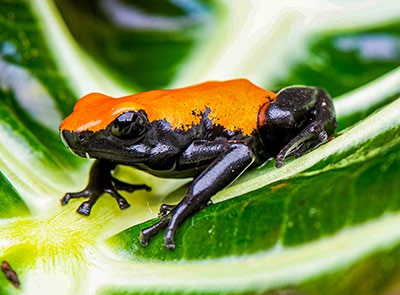
This is undoubtedly the most common question people ask about dart frogs, which is understandable given their reputation. Dart frogs are famous for their poisons, but in captivity they lose these toxins. The reason lies in their diet: in the wild, dart frogs consume prey that contains certain chemicals called precursors. These compounds enable the frogs to synthesize the toxins found in their skin. Scientists have not yet identified exactly what these compounds are or how frogs metabolize them in nature.
Captive-bred dart frogs are completely harmless. Without access to the precursor chemicals, they cannot produce toxins. Purchasing captive-bred frogs ensures they are safe and toxin-free. Wild-caught dart frogs, on the other hand, may retain toxins for a short time after capture, but the potency quickly diminishes in captivity. Importantly, only three of the more than 150 known dart frog species are dangerously poisonous in the wild, and these species are not exported from their native habitat in Colombia.
It is somewhat ironic that dart frogs are so feared, when many other commonly kept frogs and toads actually produce stronger toxins both in the wild and in captivity. Amphibians secrete poisons through their skin as a natural defense. They are not venomous—meaning they cannot actively inject toxins through bites or stings.
In most cases, amphibian toxins are secreted at low levels in the skin mucus. However, when threatened or stressed, many species increase the potency of these secretions as a defense against predators.
A Few Facts
- Most amphibians secrete some level of toxins in their skin.
- Dart frogs are unusual in requiring dietary components to produce their poisons. Most amphibians produce toxins regardless of diet.
- Many dart frog species are only mildly toxic compared to other amphibians.
- Fire Belly Toads, Cuban Tree Frogs, and various toad species produce toxins capable of causing serious illness—or even death—in humans and pets.
- The Marine Toad, commonly sold in the pet trade, is highly toxic and has released enough poison to kill dogs that mouthed them.
- The Rough-Skinned Newt (Taricha granulosa), native to the U.S. Pacific Northwest, contains tetrodotoxin (the same toxin found in pufferfish). Despite this, they are sold in pet stores.
Many beginners want to know if there is a comprehensive book that covers all the basics about dart frogs. Unfortunately, no single beginner’s book does a great job of covering everything. Some publications focus on natural history or feature photographs of rare species, but they often overlook practical care information.
The best way to learn about dart frogs is through reliable online resources. This site (Saurian.net) offers extensive information, ranging from beginner basics to advanced topics—all freely available. After reviewing the content, newcomers are encouraged to reach out with further questions. Other quality sites also exist for those who want to broaden their knowledge.