
Care sheet guide by DartFrogsAndGeckos.com
Introduction
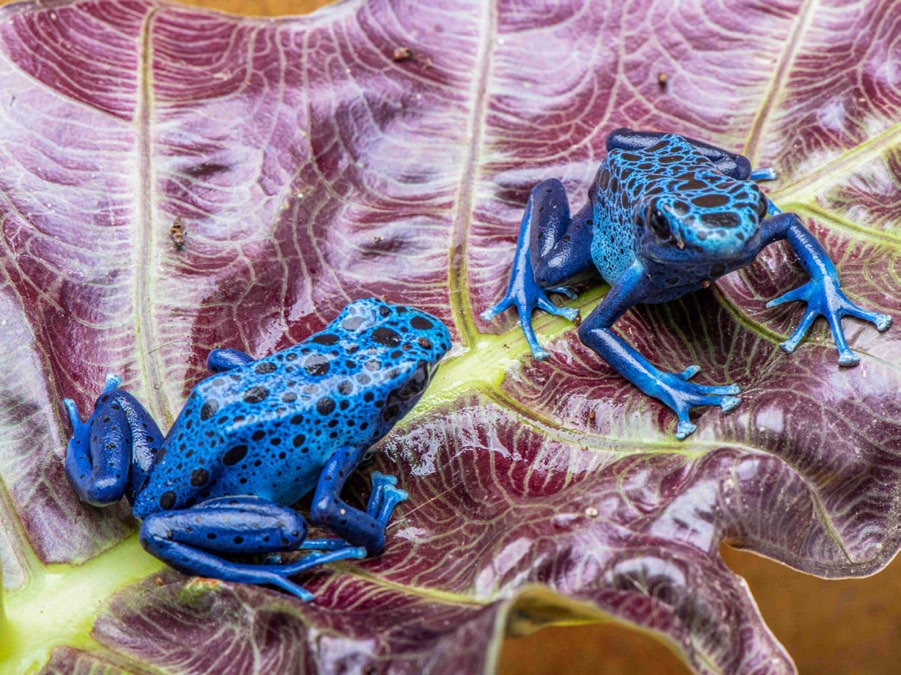
The Dendrobates tinctorius color forms and the closely related Dendrobates azureus are among the most popular dart frogs. They are visually stunning, bold, and large—great for display purposes. However, they are territorial and do not thrive in groups.
Challenges of Group Housing
Even juvenile D. tinctorius and D. azureus can be territorial. Keeping multiple frogs in a tank can result in intimidation and stunted growth. Breeding-age females often fight if housed together, especially in the presence of a male.
Housing Recommendations
- Best Option: Obtain a sexed pair of sub-adults or adults to avoid aggression issues.
- Safer Alternative: House each frog individually until sexed.
- Moderate Risk: Keep frogs in pairs of similar sizes, monitoring for signs of stress.
- High Risk: Keeping 3-5 frogs together in a 20-30 gallon tank may lead to significant losses.
Sexing and Pairing Frogs
Males have wider toe pads on their front feet, and females are typically larger with a deeper body. By 10 months, sexed pairs should be separated for breeding.
Breeding Conditions
- Temperature: 70-75°F
- Humidity: High humidity maintained with daily misting and a sealed lid.
- Egg-Laying Sites: Provide petri dishes or plastic lids under shelters such as coconut huts or cork bark.
- Incubation: Eggs should be kept damp but not submerged.
- Tadpole Care: Newly hatched tadpoles should be housed individually and fed flake fish food or algae powder.
Once breeding begins, expect clutches every 5-6 days for extended periods. With proper care, these frogs will produce large numbers of healthy offspring!