Phyllobates species
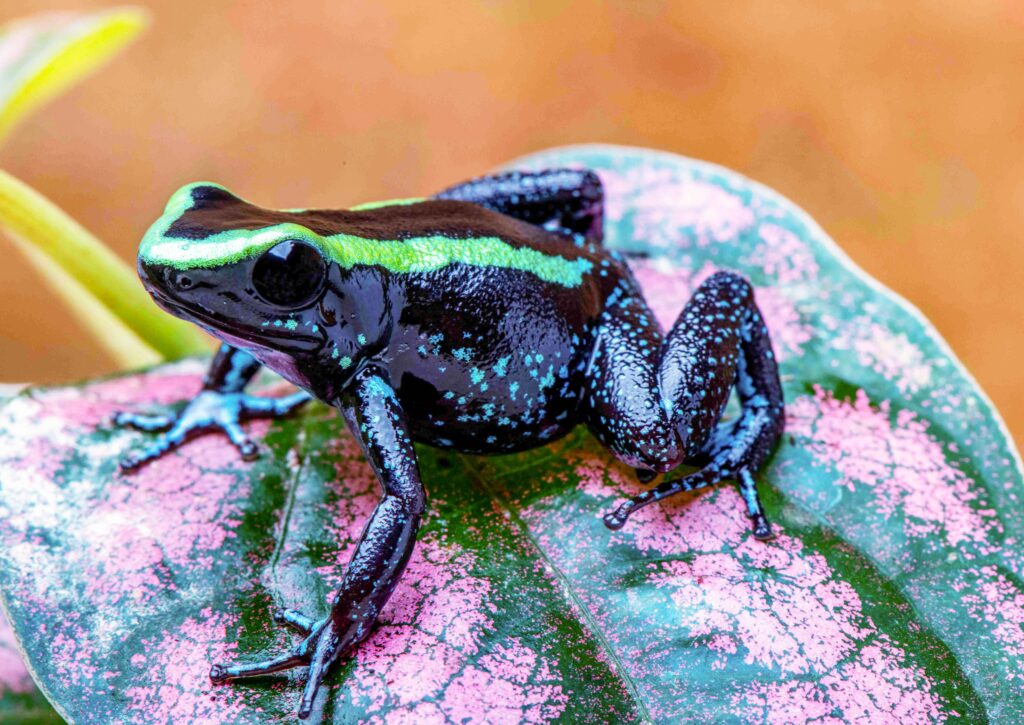
Phyllobates is the genus that includes the most toxic animals on Earth. The golden poison frog (P. terribilis) in particular carries enough batrachotoxin in the wild to kill several adult humans. Indigenous Emberá people of Colombia traditionally use these frogs to poison blowdart tips — which is where the entire "dart frog" name comes from.
The critical thing to understand: this toxicity comes entirely from their wild diet. Captive-bred Phyllobates raised on fruit flies and springtails carry no toxins whatsoever and are completely safe to keep. They cannot produce batrachotoxin on their own.
In captivity, Phyllobates are bold, active, and vocal. They are among the largest dart frogs (terribilis can exceed two inches) and are confident enough to come out and investigate when you approach their vivarium. Males have a loud, pleasant call. They do well in groups, breed readily, and are generally hardy. Most species in this genus are suitable for intermediate keepers, with terribilis and aurotaenia being the most commonly available. They prefer temperatures in the mid-to-upper seventies with high humidity.
