
These frogs are native to Costa Rican, and have been around in the hobby for longer than I have! I seem to recall the ones I used to have being bigger than those I have now, but perhaps that’s just a trick of the memory. Anyway, they are larger than aurotaenia, but not much. The group I am working with right now are around an inch and quarter in length, with a bright orangey red metallic stripe down each flank. This frog is another good group frog, although like the other Phyllobates, best breeding may be achieved by keeping them in pairs. Like the other Phyllobates, they have a loud trilling call, similar to the call of D. leucomelas, and not dissimilar to a teakettle, although not quite that loud.
| Synonyms | Locality |
|
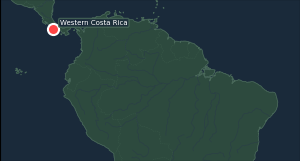
| none | Western Costa Rica | |
| Temps | Humidity | Terrarium Preferences |
| mid seventies to low eighties | High | Will spend lots of time in low vegetation, also spends time on ground, but definitely a climber. |
| Size | Visibility in the tank | Groups of these compatible |
| 1.25 inches to 1.5 inches | These frogs are fairly shy, but in a well planted tank will be seen occasionally. | Yes, this frog does well in groups. |
| Experience Level | Compatible with other species? | |
| Beginner. | Yes, should be ok with other species if not crowded | |
| Breeding | Status in Hobby | |
| While best results will probably be achieved in pairs, this frog often can be bred very well in groups. An easily bred frog. | Not as common as it once was. | |
| Our Availability | Links for this frog | |
| Regularly available. |
|
|