
The species Adelphobates galactonotus are popular frogs in the terrarium hobby, these frogs have an unusual appearance for a dart frog, in that they are generally feature a single solid color over a black background. The amount of the coloration is variable, but morphs generally only have a single color over the black.
As is the case with most of the dart frogs in our hobby, galactonotus occur in many populations, each of which has a typical appearance that is unique or at least different from other populations. Galactonotus are found in the depths of the Amazon rainforest, in Brazil, and the exact location of the various morphs is poorly known, although if you look you will find research papers that pinpoint some morphs locations. There appear to be at least a couple of dozen forms that occur in the wild.
All galactonotus can be considered a grey market frog, since the government of Brazil has never allowed their export. See other articles on this site for more information on this subject, but while exporting these frogs (from the United States) is probably not possible due to the legal complexities, keeping and breeding them seems to be fine, since they are widely kept and bred in the US, and there have been multiple legitimate and legal importations of these frogs from Europe to the US.
Anyway, this post is aimed at discussing two different galactonotus morphs in the US hobby, the “Blue” galactonotus, and the “Solid Blue” galactonotus. These two morphs are quite different, despite sharing the blue coloration, and there is definitely a lack of information about them in the US hobby.
So, “regular” Blue galactonotus were first seen in the US hobby around ten years ago, say 2013 or so. They have never really bred that well and haven’t become as common as the reds, yellows or orange forms, for some reason. However they seem to be very similar to these forms of galactonotus, in that, in my experience, they seem to need to be in a small group to breed well. As I discuss in other areas of the site, a male female pair of red or orange galacs have never bred well for me, they thrive on the group dynamic and the best success I’ve had has been in a group of four or five. Another interesting thing about the “Blue” galactonotus is that they seem to lose coloration as they age. Generally they morph out as a fairly full colored froglet, the amount of coloration on their body is very similar to that of the Red or 95% Orange form, with blue all the way down the flanks and often showing some blue on the legs. However, as they reach around 2 years old, the color coverage begins to break up and black shows through in spots and encroaching from the edges. This gives a unique look to these frogs, I’m unaware of any other dart frog that changes appearance as it ages in this way. The retreat of the blue color varies from one frog to another and I have some that are not heavily affected, and others that are nearly black.
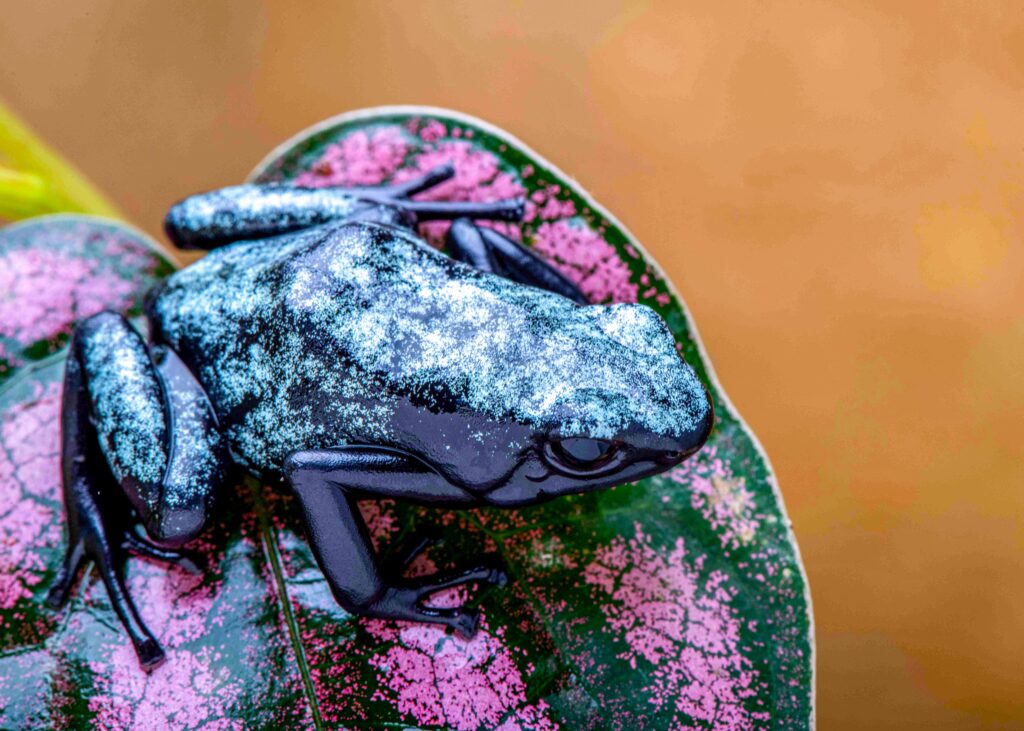
So, to summarize, “Blue” galacs are kept and bred in small groups like other “regular” galactonotus, and seem to be very similar to the standard galactonotus in the US hobby.
Next, lets take a brief look at a form of galactonotus that has been around the US hobby for 20 years or so, but has always been a rare frog. This is the “Solid Orange” form of galactonotus. I worked with these frogs back around 20 years ago, and fairly quickly decided that they were different from the regular forms of galactonotus, in several ways. First, they are significantly more bold and outgoing. These frogs behaved like a bold form of auratus or a tinctorius morph, out and about in the tank with little concern for the comings and goings outside their terrarium. Second, I noticed that they seemed to be built a little more like a tinctorius than the other galactonotus I was working with at the time. It’s not a huge difference, but there is a subtle similarity to tincs and their arched backs, in females, and the more flattened look of male tinctorius. After sexing them based on body shape, I decided to try breeding them in pairs, and I was happy to find that they bred fairly easily in pairs. Overall, they seemed to be much like a tinctorius, although I would note that I’ve since figured out that they don’t really fight much, unlike both tinctorius, and the “regular” galactonotus!
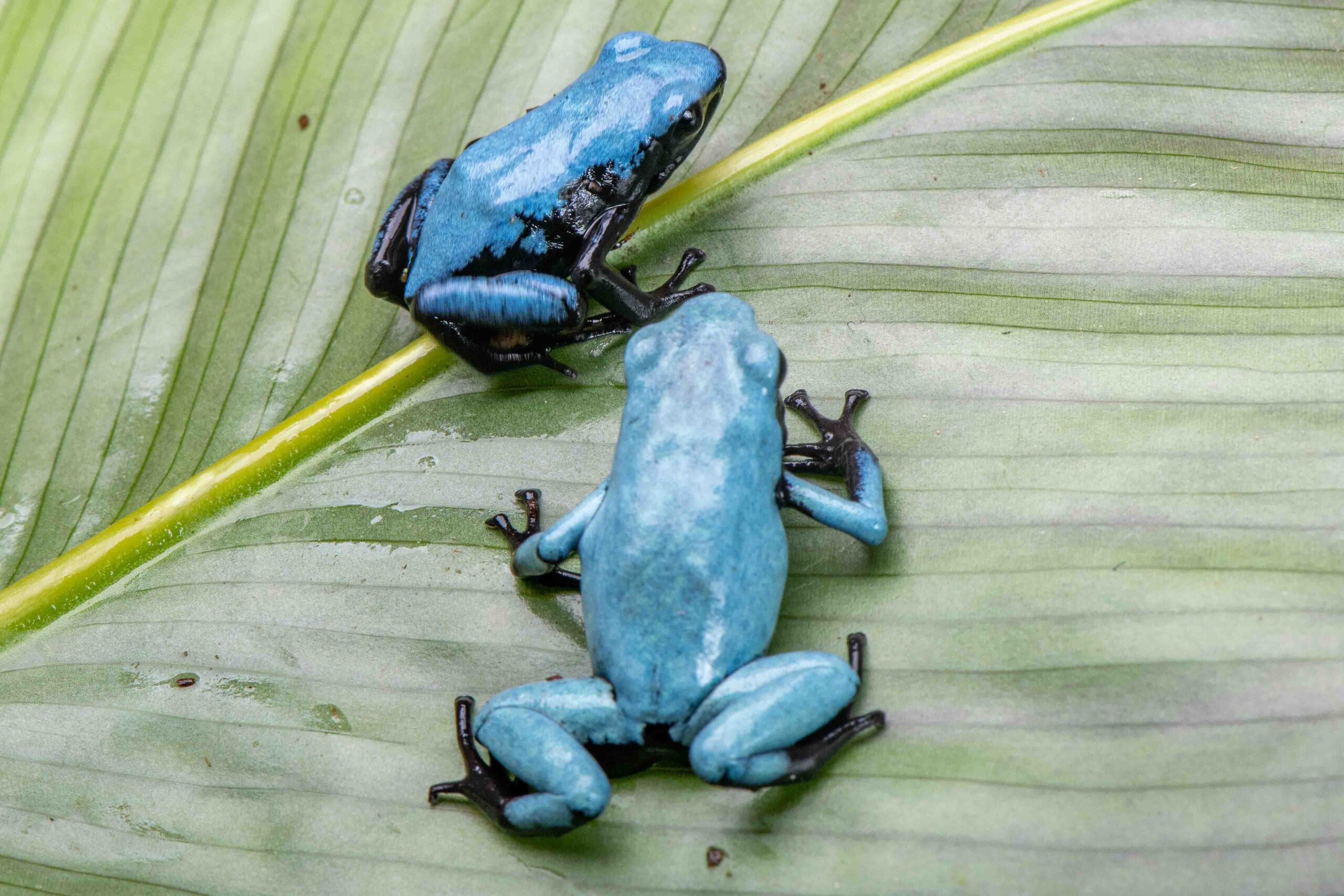
So, bearing this information in mind, let me introduce the “Solid Blue” galactonotus! “Solid Blue” galactonotus first arrived in the US in about 2022, and are still pretty uncommon. These are completely different frogs from the existing “Blue” galactonotus in the US and are, as far as I can tell, basically the same “type” of galactonotus as the “Solid Orange” are.
“Solid Blue” galactonotus don’t fade out in color like the smaller regular form of blue galacs do, and the color is a slightly lighter blue than the regular blue galacs show. In fact the regular blue galacs morph out of the water as a darker frogs, but rarely does this darker blue remain in adult specimens, as they mature the blue is always a bit lighter, but not as light as the color on a “Solid Blue”
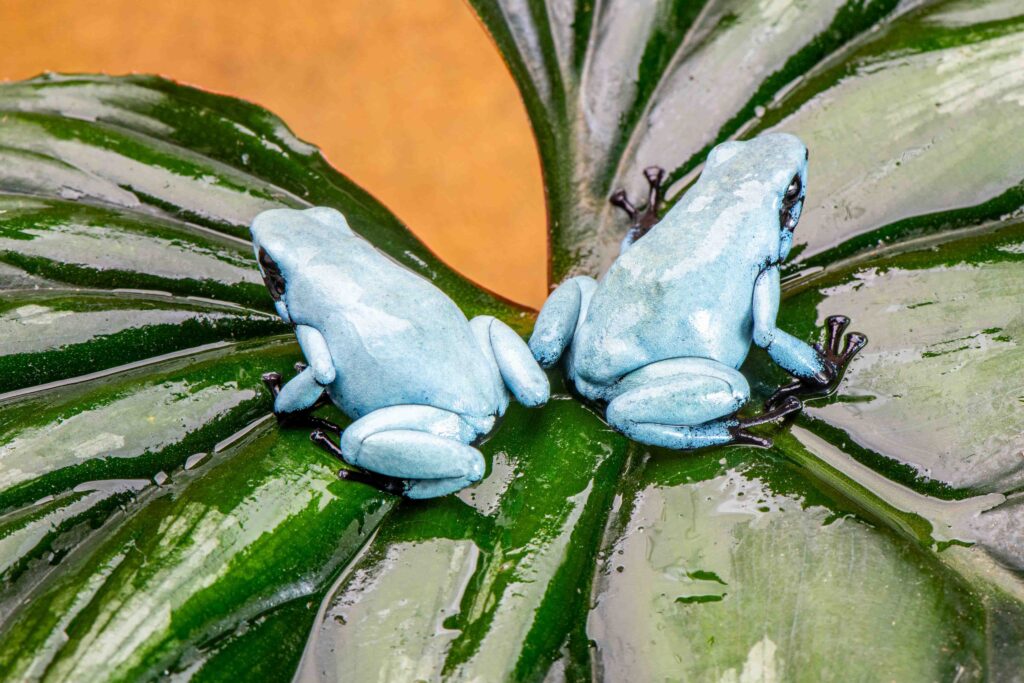
These frogs are a little larger than the “Solid Orange” form but, in all the traits and characteristics I mention above, they are the same as the “Solid Oranges”. They breed well and grow fast, and overall they are a super addition to the US terrarium hobby! As is typical with new frogs in the hobby, prices start higher, and will eventually settle at a lower point as they become more common.